
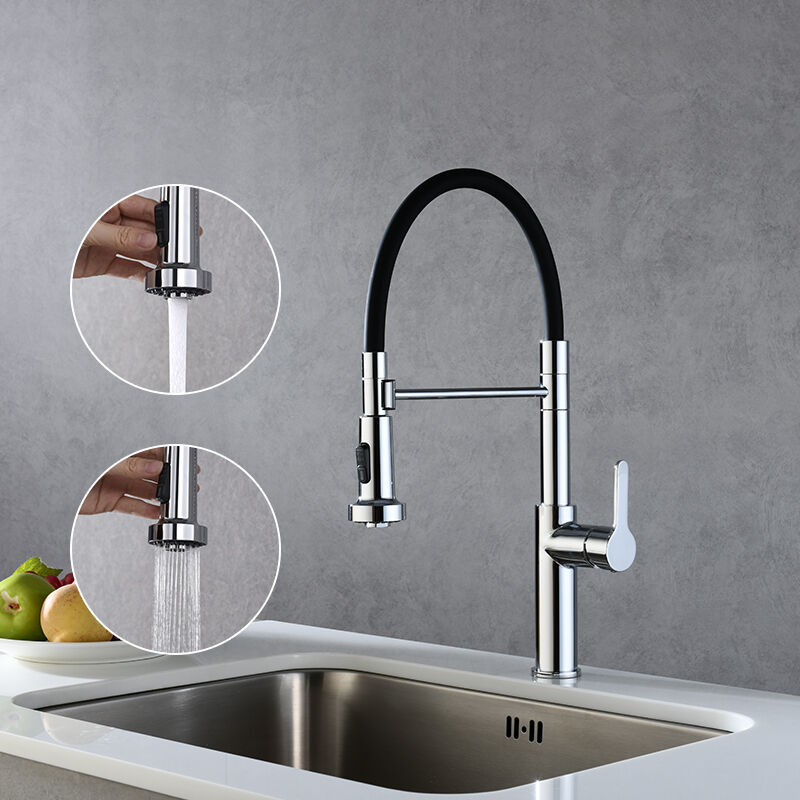
Kitchen faucets with ceramic valves work using two discs that are made with incredible precision. One stays still while the other turns, and these parts are crafted within a tolerance range below 0.1 mm. These valves are constructed with materials like zirconia or alumina oxide which have a hardness rating at least 9 of Mohs scale. The surfaces of these components are so smooth. They look like mirrors and create very little friction when moving against each other. Water passes through when the openings line up properly, and turning the handle about a quarter circle stops the flow completely. Traditional rubber seals tend to break down over time due to minerals in water, but ceramic components don't wear away or change shape, so leaks aren't usually caused by damaged seals. According to ASME standards testing shows these valves can last for more than half a million operations, which means they outlast standard compression valves by ten times.
The ceramic disc system enables unmatched precision in flow and temperature control:
Independent lab testing confirms zero leakage after 400,000 cycles at 125 psi. 300% beyond minimum industry requirements. Translating to an 18% reduction in water waste versus conventional valves per EPA WaterSense criteria.
Ceramic valves can last over half a million operational cycles according to ASME A112.18.1 standards, which makes them ten times tougher than regular compression valves. The reason for this impressive lifespan depend on the material. Ceramics are extremely hard without any friction when moving, preventing wear where it usually occurs. Most rubber components start failing around the 50,000 cycle. For homes, this means ceramic valves typically provide at least 15 years of trouble free service without leaks. When homeowners install these valves, they're not just getting better functionality today but also investing in something that will save money and headaches for many years to come.
Accelerated lab testing does highlight ceramics' resistance to scaling, but the real test comes when these materials face real-world hard water daily. The fact that ceramic surfaces do not absorb minerals means they prevent the mineral buildup that eventually clogs ball valves or cartridge systems. What makes ceramic discs stand out is their ability to continue functioning even with scale formation between the contact points—a real-world scenario that most standard testing procedures miss. This resilience can extend fixture lifespans by several years compared to traditional metal options.However, that regular maintenance is not optional, especially if water hardness exceeds 180 parts per million. Periodic descaling can keep ceramic components performing well for over two decades in many installations.
| Failure Factor | Ceramic Valves | Metal Valves |
|---|---|---|
| Mineral Scaling Impact | Delayed/recoverable failure | Catastrophic jamming |
| Hard Water Threshold | Functional up to 180 ppm | Degrades above 120 ppm |
| Field Repair Complexity | Simple washer replacement | Full cartridge replacement |
Rubber washers press against brass seats when Compression valves working, the design has been around for over 100 years. But it's getting retired in recent years because they are easy leak all the time and need to constant fixing. Most plumbers won't install them since they're pretty much obsolete now. The NKBA reports there under 7% of kitchens get these old school valves installed nowadays. Instead, ceramic disc systems have taken over the market completely. These new models don't require that awkward twisting motion people used to do with compression valves. Just give the handle a quick quarter turn and voilà! No more worrying about overtightening causing damage either, since ceramic valves seal properly without needing any special force applied.
Ball and cartridge valves improve upon compression designs but still depend on elastomeric seals and moving metal parts vulnerable to mineral buildup and wear. They require:
Ceramic valves retain consistent responsiveness and smooth operation, even after decades of exposure to hard water, without performance decay.
Finding the right ceramic valve for kitchen faucet involves looking at more than just the valve mechanism itself. Start with what it's made of. Brass or stainless steel bodies? last longer without corroding or collecting minerals over time. The finish matters too. Good quality chrome or PVD coatings stand up better against scratches and won't tarnish as quickly. Check how much water flows through per minute, ideally somewhere between 1.5 and 2.2 gallons. Look for faucets where the temperature adjustment doesn't require turning the handle all the way, since this usually means better ceramic disc quality inside. Make sure the mounting style matches what's on your sink deck. Single hole, three hole, or bridge style installations is differently. And don't forget about those little details like the aerator and proper certifications. The ASME A112.18.1 standard ensures the faucet can handle pressures up to 125 psi, stays free from lead contamination, and maintains its structure even after years of regular use. All these considerations together help guarantee a faucet that lasts, works smoothly, and gives just the right amount of water control when needed.
 EN
EN