
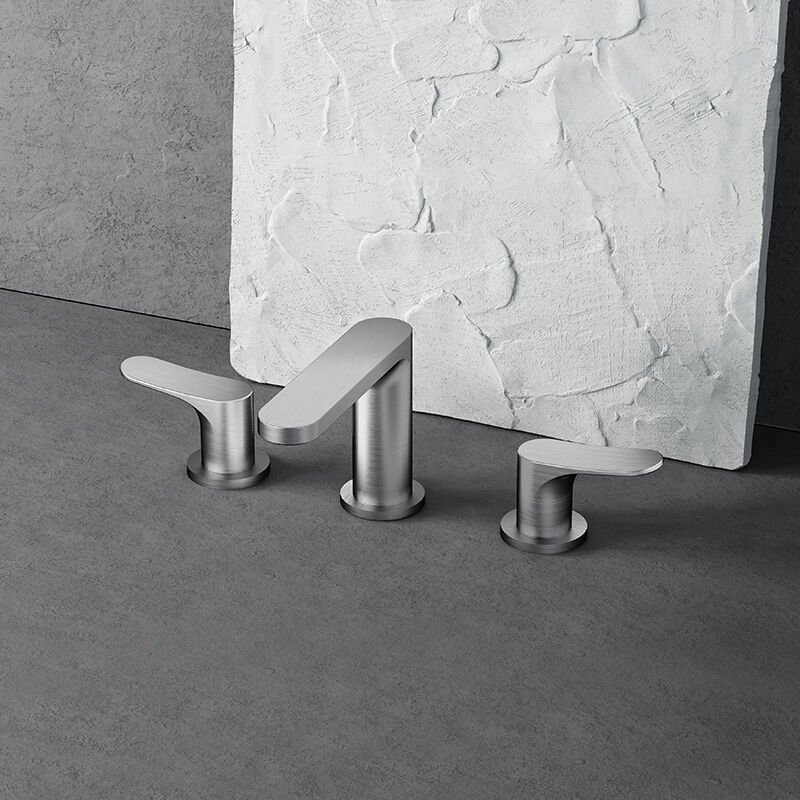
Properly installing a bathroom faucet starts long before you touch a wrench. A meticulous pre-installation assessment prevents leaks, damage, and costly rework by verifying compatibility between your faucet and sink while selecting specialized tools for confined spaces and torque-sensitive components.
Begin by measuring your sink’s deck thickness and hole configuration. Standard faucets require specific hole spacing—center-set models fit single-hole sinks, while widespread designs demand three holes spaced 6–16 inches apart. Confirm the faucet’s baseplate or escutcheon fully covers existing holes. For vessel sinks or thick stone countertops, verify that the included mounting hardware accommodates the deck depth. Mismatched components cause 42% of premature leaks, per 2023 plumbing standards data from the International Association of Plumbing and Mechanical Officials (IAPMO). Cross-reference manufacturer specs against your sink’s dimensions to avoid gaps or unstable mounting.
Under-sink spaces demand compact, purpose-built tools. Standard wrenches often over-tighten cartridge valves and compression fittings—a leading cause of hairline cracks in ceramic discs. Instead, use:
Calibrated torque tools prevent deformation of brass threads and composite valves, ensuring uniform seal compression without stressing materials.
According to International Plumbing Code (IPC) field reports, over-tightening accounts for roughly 70% of post-installation leaks in bathroom faucets. The IPC identifies excessive force as the leading installation error—cracking ceramic cartridges, deforming rubber gaskets, and distorting brass mounting nuts. A secure seal requires moderate, even torque—not brute strength. IPC guidance recommends hand-tightening the mounting nut until snug, then adding no more than a quarter-turn with a wrench. Over-tightening compresses seals beyond their elastic limit, causing gradual leakage. Hidden leaks from this mistake can damage cabinetry and encourage mold growth. Adhering to these torque principles eliminates the most common cause of faucet failure.
Different cartridge materials require specific torque to avoid leaks. Using a torque wrench ensures precision. The table below gives safe ranges for common materials.
| Material | Recommended Torque (in-lbs) | Key Note |
|---|---|---|
| Brass | 10–15 | Over-tightening can warp the housing; use a wrench sparingly. |
| Ceramic | 5–10 | Excessive force cracks discs; hand-tighten plus light wrench turn. |
| Composite | 3–8 | Plastic threads strip easily; tighten by hand only, no tools. |
Always verify the cartridge material before tightening. Brass tolerates moderate force, but ceramic and composite demand a lighter hand. Manufacturers often list torque specs in the manual; if not, these guidelines provide a reliable baseline. Applying correct torque extends faucet life and directly addresses the root cause behind the IPC’s cited 70% leak rate.
When retrofitting a bathroom faucet, choosing the correct supply line material is critical for long-term leak prevention. PEX-A crimp connections offer superior flexibility and resistance to kinking—ideal for tight under-sink spaces—but require a dedicated crimp tool and consistent pressure to form a watertight seal. Braided stainless steel supply lines deliver a pre-assembled, torque-resistant solution that simplifies installation and reduces overtightening risk. For most retrofits, braided stainless is recommended for its ease of use and documented reliability under standard residential pressures. Always inspect the washer inside the nut for nicks or deformation before tightening.
Before opening the water supply, verify that shut-off valves are fully operational and not seized. Turn each valve clockwise to close, then slowly reopen to flush any debris. After connecting the lines, perform a pressure-balancing check by turning on both hot and cold handles at the sink. If flow fluctuates or sputters, trapped air or unbalanced supply pressure is likely. Use a pressure-reducing valve if static pressure exceeds 80 psi—many municipal supplies run near 100 psi, which stresses faucet components and accelerates wear. Complete the test by running water for two minutes and inspecting all connections for moisture.
Key tools include a basin wrench for confined spaces, calibrated torque wrenches, and thread-sealing tape rated for potable water systems to ensure precise and secure installation.
Measure your sink’s deck thickness and hole spacing. Center-set faucets fit single-hole sinks, while widespread faucets require three holes spaced 6–16 inches apart.
Over-tightening can crack ceramic cartridges, deform rubber gaskets, and warp brass mounting nuts, often leading to leaks. Use moderate, even torque to avoid such issues.
Brass: 10–15 in-lbs; Ceramic: 5–10 in-lbs; Composite: 3–8 in-lbs. Adjust torque based on the cartridge material for optimal results and leak prevention.
Braided stainless steel lines are highly recommended for their ease of use and reliability under residential pressures, though PEX-A crimp lines offer flexibility for tight spaces.
 EN
EN